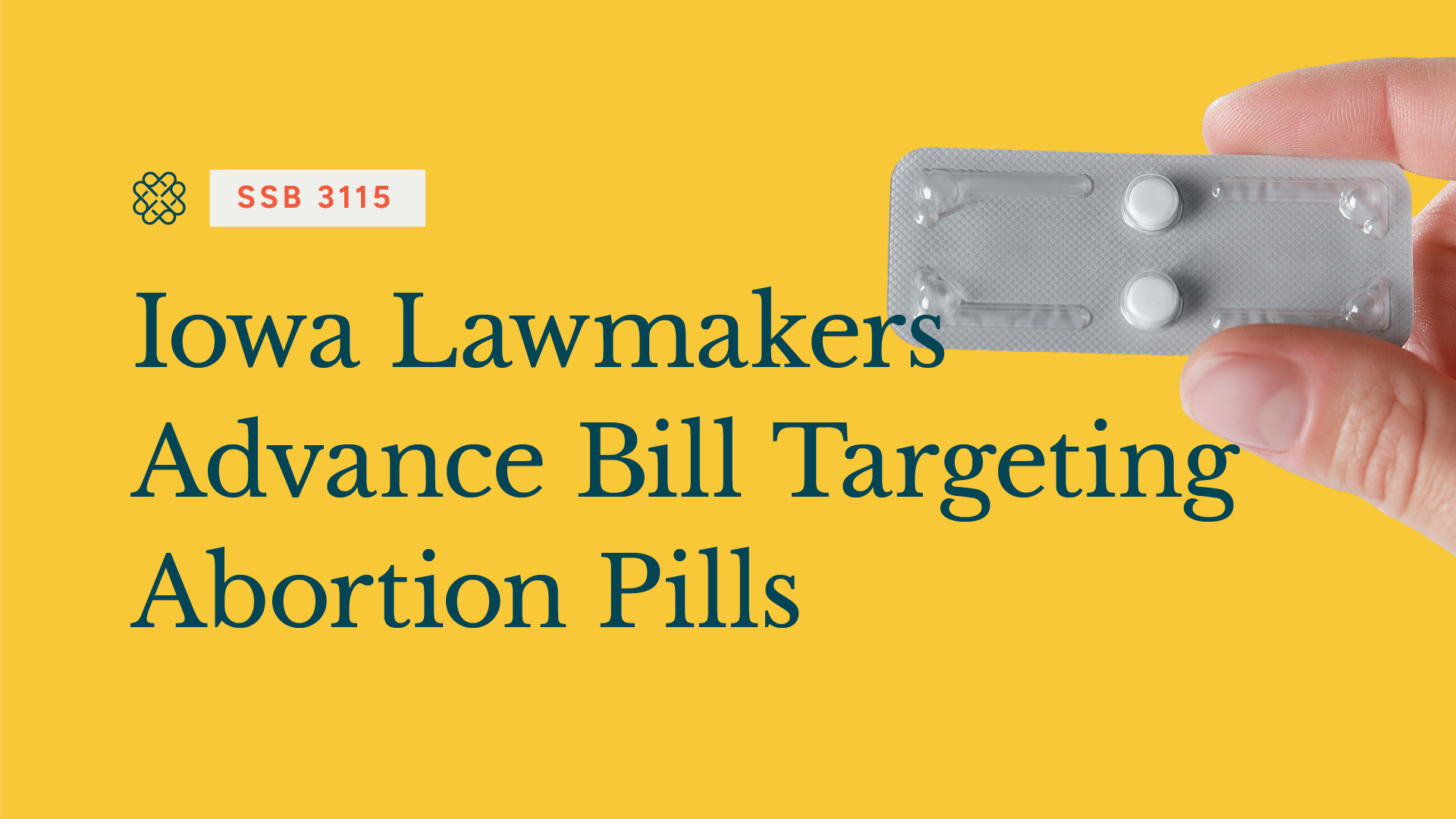

Medication abortion now accounts for more than half of all abortions in the United States. As clinic access becomes more limited in many states, abortion pills, particularly mifepristone, have become a central focus of legislative attention.
In Iowa, two newly introduced bills — SSB 3115 in the Senate and HSB 704 in the House — signal that regulation of medication abortion, including how it is prescribed and delivered, will be a major topic this legislative session.
Both proposals include provisions that would increase requirements around abortion-inducing drugs, reporting, informed consent, and oversight. While the bills differ in structure, they share a common theme: tightening control over how medication abortion is accessed and monitored. Understanding these efforts requires separating medical evidence from policy strategy.
Why Medication Abortion Has Become a Focus
Medication abortion allows patients to receive care earlier in pregnancy, often without traveling to a clinic. For patients in rural areas or communities with limited provider access, telehealth prescribing and mail delivery can determine whether care is realistically accessible at all. For some policymakers and advocacy groups, that accessibility presents a challenge to existing abortion restrictions.
Limiting mail delivery is one way to restrict access without banning abortion outright. It shifts oversight away from clinics and toward providers, telehealth systems, and reporting requirements.
Both SSB 3115 and HSB 704 reflect this broader strategy by proposing additional conditions tied to abortion pills, including expanded documentation and state-directed counseling requirements.
The Safety Argument and the Evidence
Opponents of mailed mifepristone frequently frame restrictions around safety, arguing that:
- Telehealth reduces physician oversight
- Complications may be harder to manage
- Gestational dating may be less precise
Medication abortion has been extensively studied for decades. Major medical organizations, including ACOG and the World Health Organization, consider medication abortion safe and effective, including when delivered via telehealth under established medical protocols.
Research comparing telehealth and in-person care shows similar safety outcomes and very low complication rates. No medical care is entirely risk-free. But existing medical standards already address screening, dosing, follow-up, and emergency guidance.
The current legislative proposals do not introduce new clinical safety protocols developed by medical governing bodies. Instead, they layer additional legal and reporting requirements onto an existing medical framework.
Reporting, Oversight, and Legal Exposure
A significant component of SSB 3115, and elements mirrored in HSB 704, involve expanded reporting tied to abortion-inducing drugs.
These include:
- State-mandated informed consent language
- Detailed reporting related to medication abortion complications
- Identification of physicians and facilities providing care
- Broader liability provisions affecting medical professionals
These reporting structures raise questions about privacy, provider safety, and the practical impact on healthcare workforce retention, especially in a state already experiencing shortages in OB-GYN and maternity care.
Importantly, medical experts note that it is not clinically possible to determine through examination alone whether a miscarriage or pregnancy loss was caused by medication abortion. This makes certain reporting assumptions medically complex and potentially speculative.
Law, Authority, and Control
Beyond safety arguments, efforts to restrict mailed mifepristone often center on regulatory authority. Debates over federal mailing laws, state oversight of medical practice, and telehealth jurisdiction reflect broader questions about who regulates healthcare and how.
Mail delivery also allows abortion care to remain private and less geographically constrained. In rural areas, where provider access may require hours of travel, telehealth can serve as a substitute for unavailable in-person services. Restricting mail access reintroduces geography as a gatekeeper.
Why This Matters in Iowa
Iowa faces documented shortages of reproductive healthcare providers and closures of labor and delivery units in rural communities. In that context, proposals like SSB 3115 and HSB 704 do not exist in isolation. When additional legal risk, reporting obligations, and liability exposure are layered onto providers, some may choose not to offer certain services at all.
For rural Iowans, that can translate into:
- Longer travel distances
- Delayed care
- Reduced telehealth availability
- Increased strain on an already limited workforce
These bills are not framed as outright bans. Instead, they adjust the regulatory landscape around medication abortion. The practical question for Iowa is how those adjustments will affect access in communities where care is already limited.
> Watch Dr. Francesca Turner break down SSB 3115
After testifying before the subcommittee, Dr. Turner shares what this bill could mean for patients and providers in Iowa. Hear directly from a practicing OB/GYN about the medical and workforce concerns at stake.
For more reproductive rights information and updates on Iowa healthcare access, visit our resources page or sign up for our newsletter.
Empower change.
Sign up for our newsletter and stay informed on reproductive healthcare issues in Iowa.