
Access to birth control is an important part of preventive healthcare. It allows people to plan if and when they want to become pregnant, manage certain medical conditions, and make decisions that are right for their health and future.
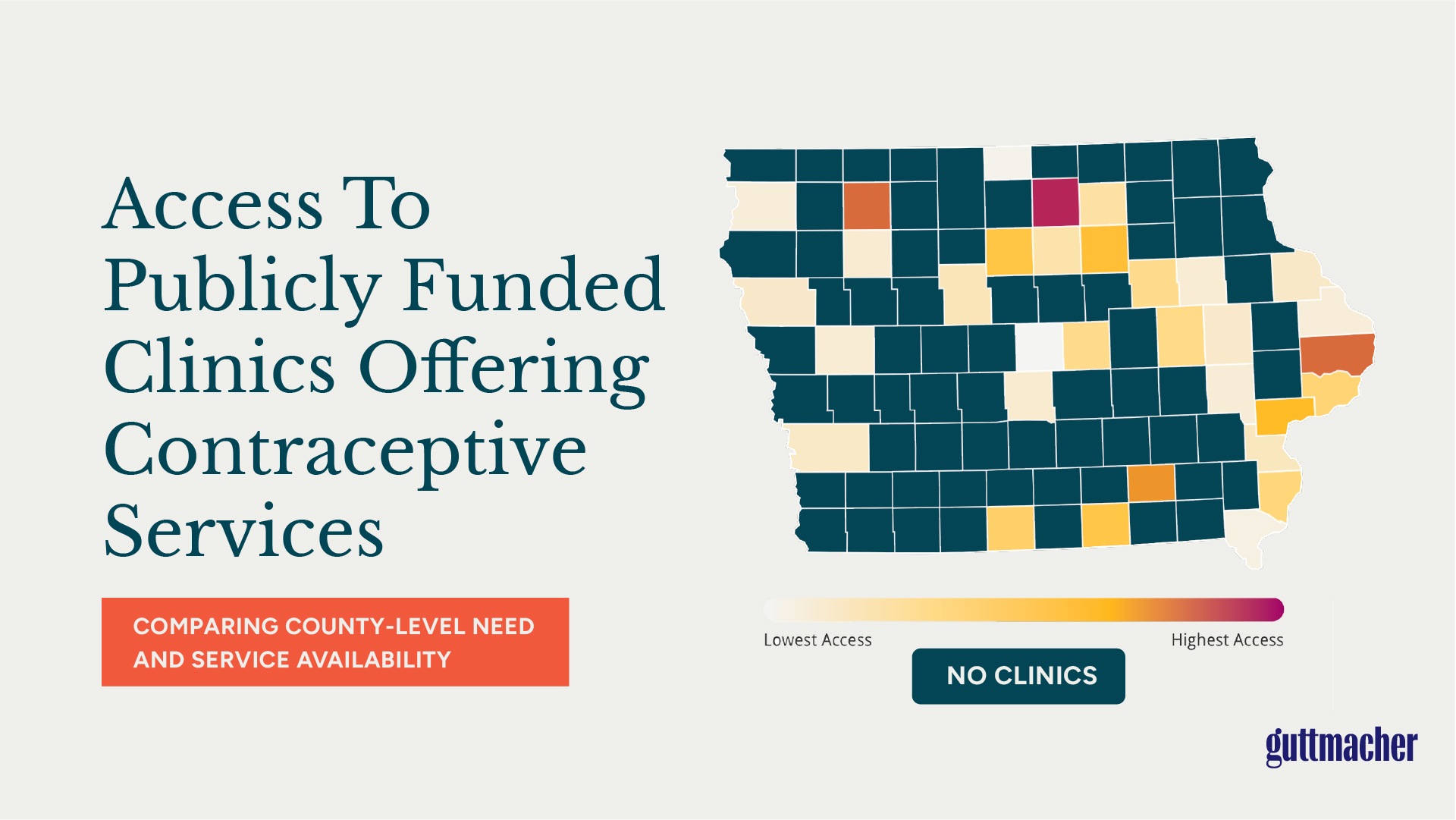
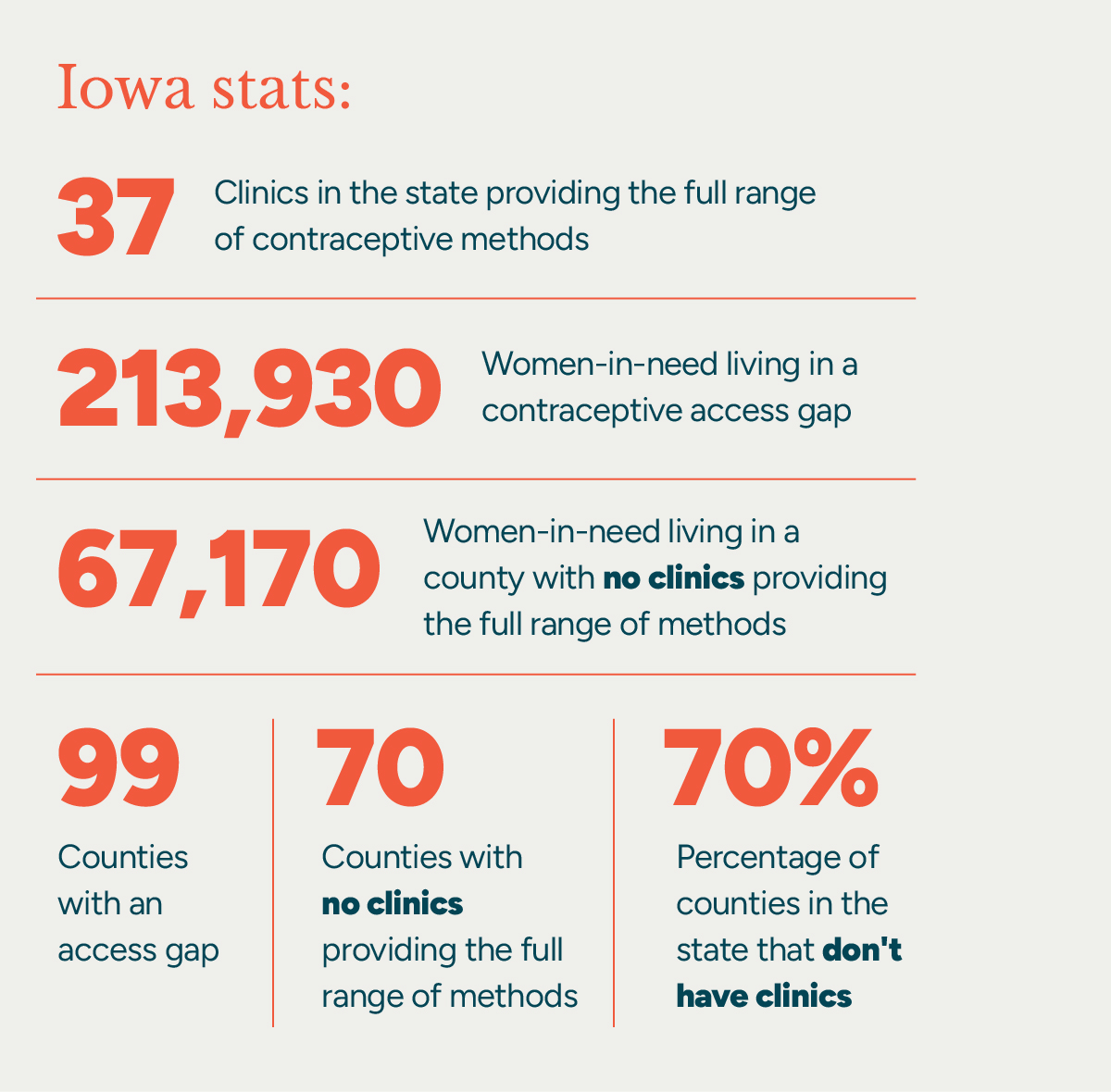
A new national analysis from the Guttmacher Institute and Power to Decide shows that every one of Iowa's 99 counties has a contraceptive access gap. That means the need for publicly funded contraception exceeds the availability of local services.
While the size of the gap varies across the state, the message is clear: access to affordable contraception remains a challenge for Iowans in every county.
What Is a Contraceptive Access Gap?
A contraceptive access gap exists when there are more people who need low- or no-cost birth control than publicly funded clinics in a county can serve.
This updated measure replaces the older concept of "contraceptive deserts" and provides a more complete picture of whether communities have meaningful access to care, not simply whether a clinic exists.
Why Access Matters
Birth control is healthcare.
People use contraception for many reasons, including:
- Preventing pregnancy
- Treating endometriosis
- Managing polycystic ovary syndrome (PCOS)
- Regulating menstrual cycles
- Treating heavy or painful periods
- Managing hormonal conditions
When access is limited, patients may have to travel farther, wait longer for appointments, or settle for a method that isn't their preferred choice.
For many Iowans, especially those living in rural communities, transportation, time away from work, childcare, and cost can all become barriers to receiving care.
Access Is About More Than Geography
The new maps emphasize that access isn't simply about whether a clinic is located nearby.
Meaningful access also depends on whether that clinic:
- Can accept new patients
- Has the capacity to meet community demand
- Offers the full range of FDA-approved contraceptive methods
- Provides affordable care
A county may have a clinic but still have a significant contraceptive access gap if local demand exceeds what providers can offer.
Iowa's Healthcare Landscape Continues to Change
Contraceptive access is one part of a broader healthcare picture.
Iowa continues to experience:
- Healthcare workforce shortages
- Growing maternity care deserts
- Hospital and clinic closures
- Reduced access to labor and delivery services in many communities
These challenges affect access to reproductive healthcare across the state—not only abortion care, but also birth control, prenatal care, cancer screenings, fertility care, and routine preventive services.
Related reading:
- Iowa's Growing Maternity Care Deserts
- Why Young Families Are Leaving Rural Iowa and What It Means for Our Future
- The Current State of Reproductive Healthcare in Iowa
The Bottom Line
Access to contraception shouldn't depend on your ZIP code.
Yet new data shows that every county in Iowa has a contraceptive access gap, and nearly 214,000 women who rely on affordable birth control live in communities where publicly funded clinics cannot fully meet the need.
Understanding where these gaps exist is an important step toward improving healthcare access for individuals, families, and communities across Iowa.
Sources
For more reproductive rights information and updates on Iowa healthcare access, visit our resources page or sign up for our newsletter.
Empower change.
Sign up for our newsletter and stay informed on reproductive healthcare issues in Iowa.