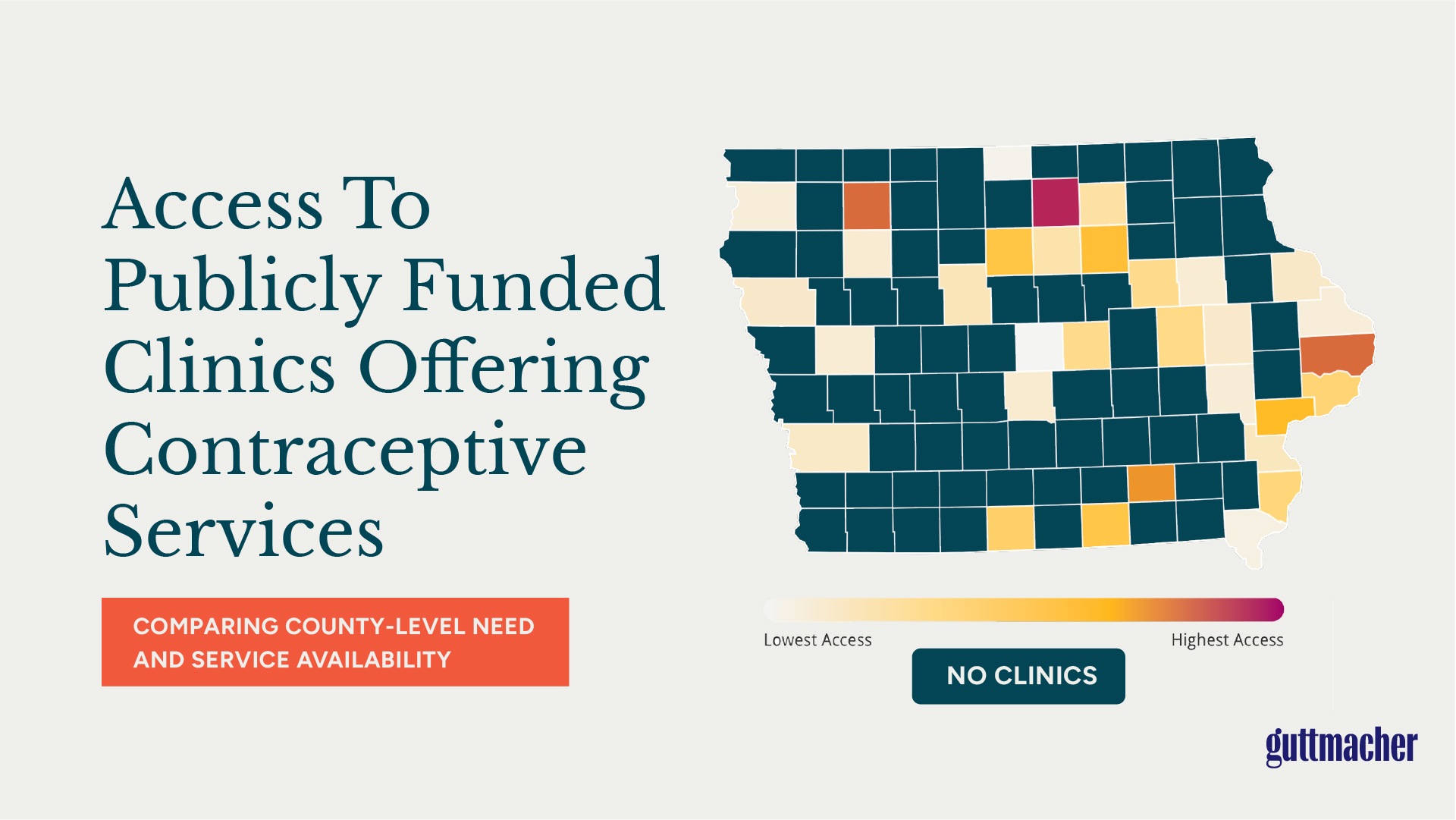

Iowa’s current abortion law has changed how and when people can access reproductive healthcare across the state.
For many patients, this has meant:
- Delays in care, including time-sensitive and medically necessary treatment
- Increased travel, often out of state, to access care
- Added strain on an already limited healthcare workforce
- Increased maternity care deserts (areas with limited or no access to OB-GYNs, birthing hospitals, or prenatal services)
- Doctors delaying care due to uncertainty around how the law is applied, even in serious medical cases
These impacts extend beyond abortion alone, affecting broader access to reproductive and maternal healthcare, especially in rural communities.
Want to better understand what the law does and what’s still legal in Iowa? Read more here.
How the 6-Week Abortion Law Was Passed
In 2023, Iowa passed House File 732, a law that restricts abortion once fetal cardiac activity is detected, typically around six weeks of pregnancy.
The bill moved through the legislative process and was voted on in both the Iowa House and Senate before being signed into law.
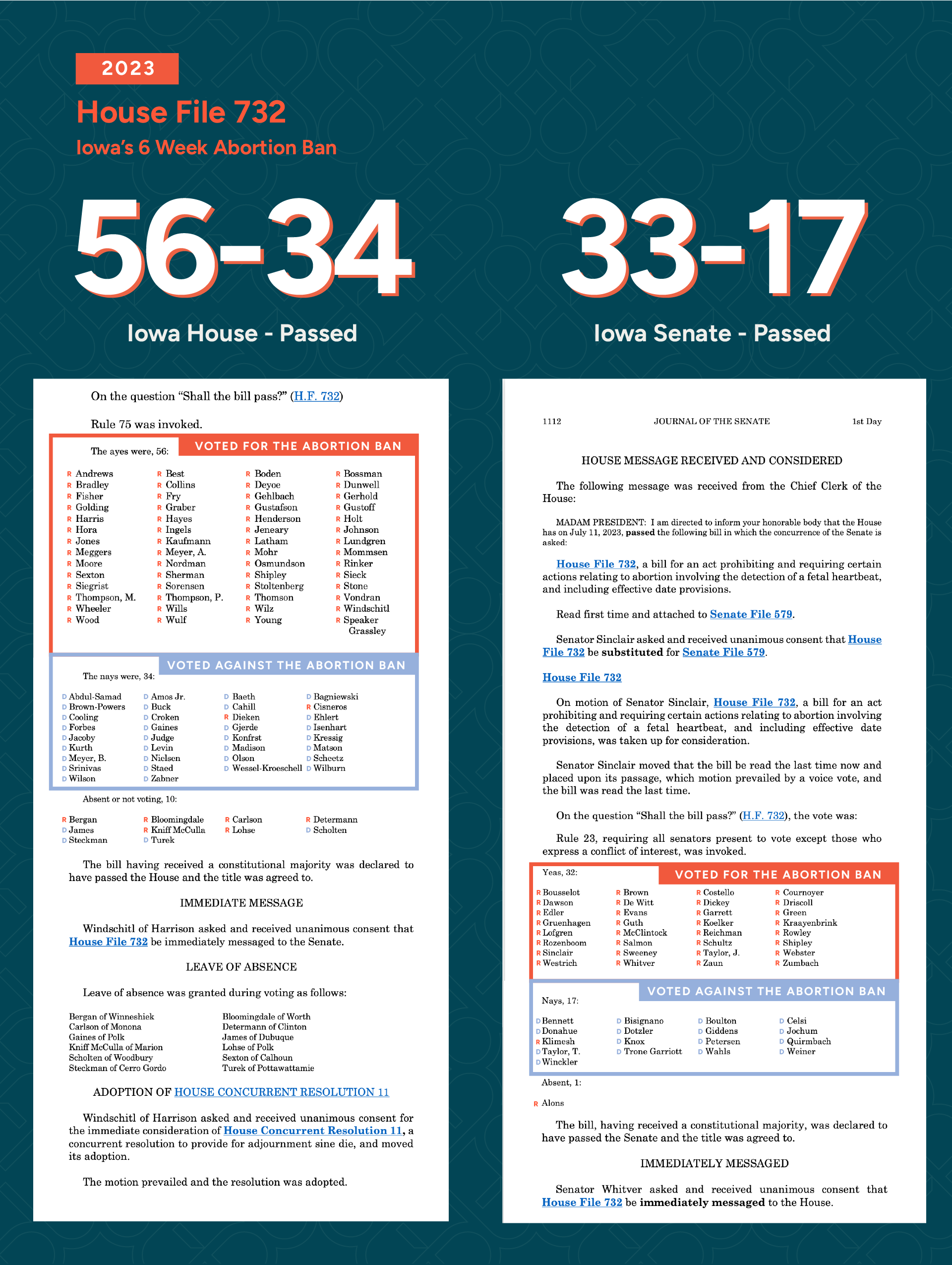
Voting on HF 732 reflected clear differences among lawmakers, passing in both chambers largely along party-line votes.
- Iowa House: Passed 56–34
- Iowa Senate: Passed 33–17
See how your legislator voted on the abortion ban:
- Iowa Senate Journal (HF 732 vote): https://www.legis.iowa.gov/docs/publications/SJNL/20230711_SJNL.pdf#page=18
- Iowa House Journal (HF 732 vote): https://www.legis.iowa.gov/docs/publications/HJNL/20230711_HJNL.pdf#page=12
These records include roll call votes, meaning you can see exactly how each legislator voted.
To find how your specific representative or senator voted, you can search their name within these records or look up your district here.
How laws can change
Laws are not permanent. They can be amended, repealed, and replaced. These changes happen through new legislation, legislative votes, and elections that determine who holds office.
The individuals elected to state positions directly influence which policies are introduced, debated, and passed.
Why this matters for Iowans
Policies like Iowa’s abortion law don’t just affect one area of care. They shape broader healthcare access across the state.
In rural communities especially, where provider shortages already exist, changes to healthcare laws can have ripple effects on:
- Provider availability
- Timeliness of care
- Access to services
Understanding how those decisions are made and how legislators voted can help provide context when evaluating current policies and future proposals.
Your Voice, Your Vote.
Voting is one of the most direct ways to take part in decisions that shape healthcare, communities, and everyday life in Iowa. Making a plan ahead of time helps ensure your voice is counted.
- Check or update your voter registration here.
- Learn how to register, vote early, or vote absentee here.
- Find step-by-step Iowa-specific voting information here.
Taking a few minutes now to prepare can make the process simple and ensure you’re ready when it’s time to vote.
The Bottom Line
Laws like HF 732 are the result of decisions made by elected officials and those decisions shape how healthcare is accessed across Iowa.
Understanding what’s on the ballot, how laws are passed, and how legislators have voted helps connect policy to real-world impact.
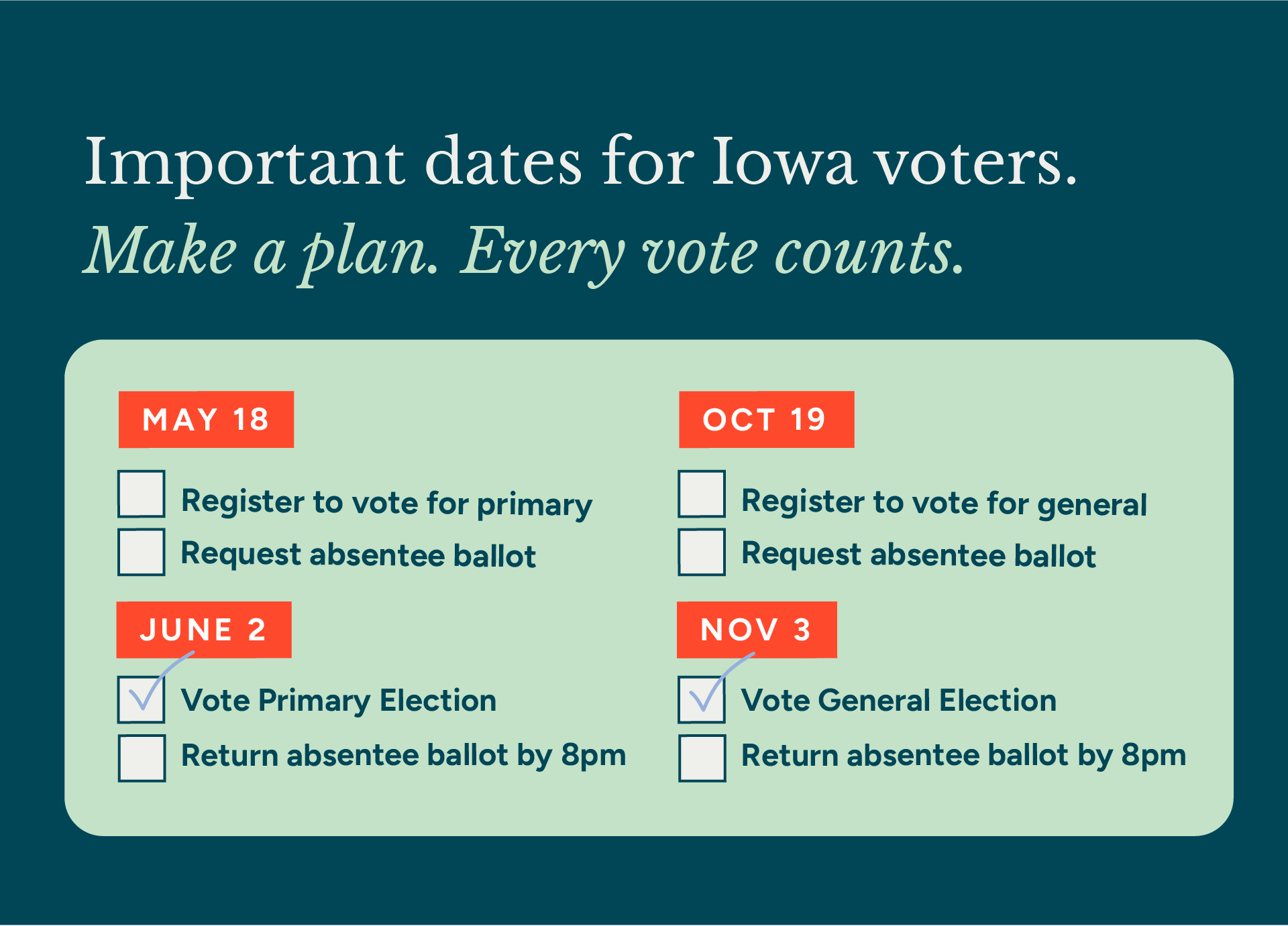
Key dates to know:
- May 18, 2026: Voter registration deadline for the primary
- June 2, 2026: Primary Election (You can also register on election day)
- October 19, 2026: Voter registration deadline for the general election
- November 3, 2026: General Election (You can also register on election day)
Learn more about how to vote here.
Your voice matters in these decisions and voting is how it’s heard.
For more reproductive rights information and updates on Iowa healthcare access, visit our resources page or sign up for our newsletter.
Empower change.
Sign up for our newsletter and stay informed on reproductive healthcare issues in Iowa.